
Eidolon
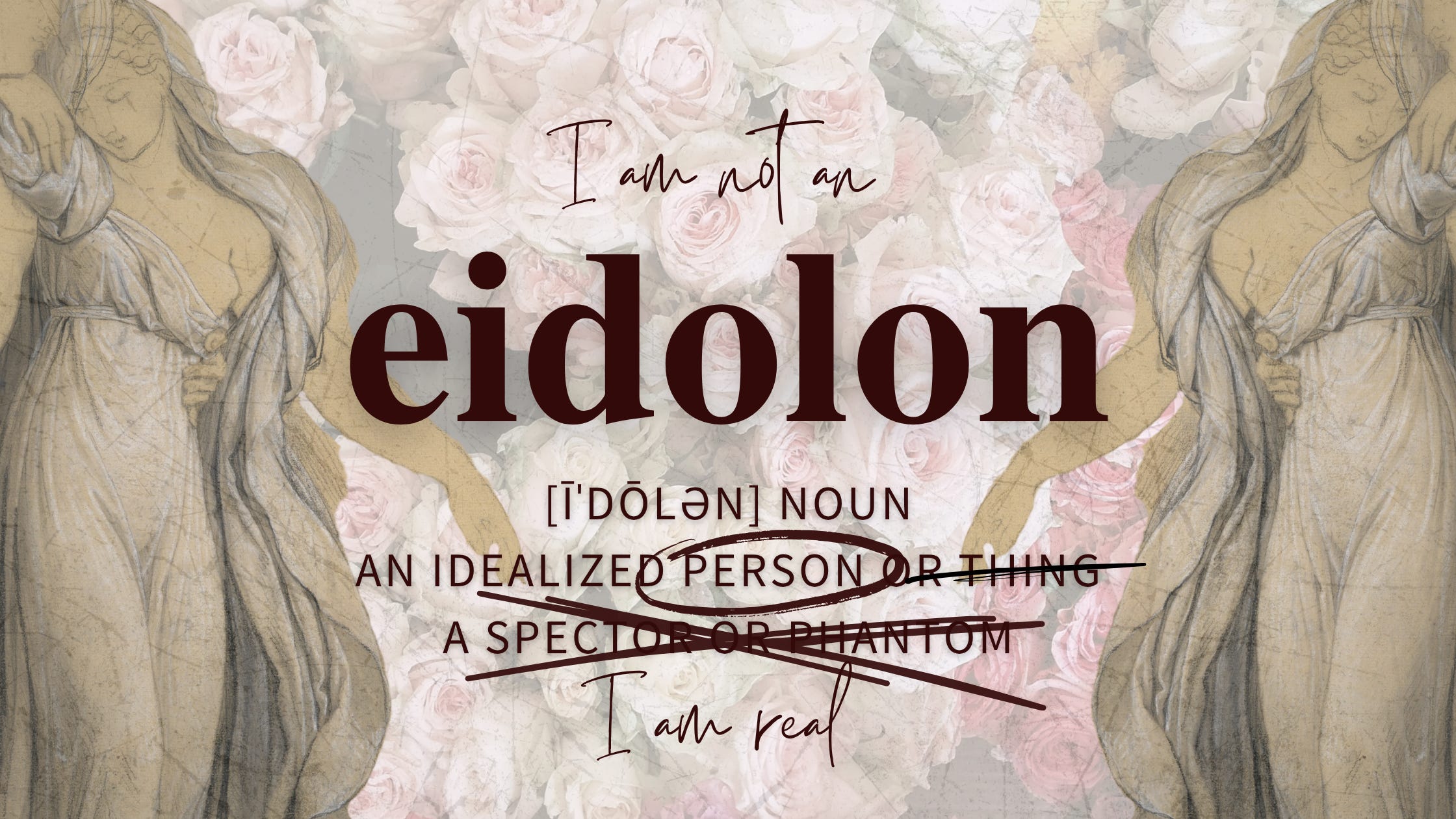
Will the real Helen please stand up?

I BEAR THE FACE OF A WOMAN NAMED HELEN, and I will recount the sorrows I have suffered in her stead.
I took my first breath in the embrace of a man, not in my father’s arms, but in the rough hands of a prince who was once a shepherd.
“Helen?” he whispered in my ear as if the name might mean something to me. I could not speak yet and took in my second living breath. The smell of him, sweat and sea brine perfumed with rose oil and myrrh, twinged my newly formed nostrils. A natural reflex of repulsion.
“I thought I’d lost you in the waves,” the prince declared. “I thought the cruel fates had stolen you away, but, gods be praised, I found you on the shore, and you’re alive.”
Alive, I thought, trying to comprehend this man’s meaning. I was alive. I felt the wind and waves move my hair. My feet made impressions in the sand. A stranger’s hands made impressions on my skin.
“You’re in a daze,” he said, lifting me up from the waters of my birth. Rough hands, strong arms, hollow chest. The build of a man who never had to push back. He carried me onto shore, where more men hurrahed my exit from the waves, but it remained to be seen if I had been saved.
“Do you have pain?” my possessor enquired.
Like many newborns, my first word was “No,” and a lie. The salt in my eyes, the cold ocean spray, the dig of his nails into my thigh all stung my fresh body. But my deceit made the man happy. He flashed bright teeth at me. His dark eyes softened. I smiled back. I’m told I have a nice smile, a smile men kill for
.
I learned from a sailor on the beach that I had gone missing from a ship. When I could not be found, they beached the vessel and scoured the shore for my body, for only death could be expected from anyone lost overboard. I neither remembered setting sail nor falling into the sea, but the sailor knew me by the same name, Helen, and he spoke to me like a companion. He and the prince gave me cooked meat and warm drinks for nourishment, and set me by a fire for warmth.
“How long until we reach Troy?” the prince asked the sailor.
“’Fore the moon rises on the morrow,” answered he. I knew nothing of Troy and the moon, and still counted my breaths by the tens. But within me, I felt a small dread for our destination and a longing to sail in the opposite direction. The man wrapped his arm around me. His touch gave me chills, and yet he showed me nothing but affection.
I thought then that my mixed feelings might be side effects of my creation; I know now that they were borrowed from the woman whose image I bore. The woman whose berth I took on a boat bound for Troy.
I did not like sailing, but our voyage came to a swift end just as the helmsman predicted. The moon rose as a sliver in the pink twilight. Oars beat against the dark seas like vintners pressing grapes with many feet. A drum in the stern kept rhythm with the churn. Watchmen announced the sighting of land, but when I looked, I saw nothing but waves and shadows.
I let myself get lost in the thump-swash-thump-swash of the drum and the oars. Every oar stroke surged the boat ahead, and my body swayed with the motion. This unsettled my stomach, but I had nothing left in me to wretch into the waters. The sailors marveled that the sea made me vomit.
“You’ve been at sea for many days,” one said, “you should be over the sick by now.”
But this was my first time at sea. I wondered if she, the woman who started the voyage in my place, had gotten over the sick.
Lights dotted the horizon. Little fires to guide the ship to harbor. The drum thundered faster. Men, eager to be home, kept up, and the sea boiled. The prince, Paris, was his name, sat beside me. He was the only man not at work bringing the ship to port. Our hands touched on the bench. His fingers held mine, but I don’t think he sought to comfort me. He said something. The sound of the oars slapping the sea beat his words away from my ears.
I have no warm memories from my first days of life, save for the fire on the beach after my birth. I had no mother to nuzzle me to her breast. No father to hold me with pride. Midwives were absent, as were their blankets and remedies. I learned sea shanties before I heard lullabies. The waves rocked me to sleep. I knew life to be rough and hard, pain and misery from the beginning, which is why I think I was ready for the long years that followed my arrival in Troy.
I don’t know how, but the sailors managed to stop the vessel before it sailed through the rocks and sand of the harbor. The men insisted I be the first to step off the boat. Paris followed close behind, holding my hand like a tether.
An old man welcomed us onto the pier. I had no concept of what a king was, but I could tell this man was different from all the rest. He held his head high despite the haunch of age in his spine. His clothes were the color of the sunset, and those around him even regarded him as one does the sun: eager to stand in the warmth, but unable to look into the light.
I knew no better and stared directly at King Priam’s brilliance. His silver eyes flickered with old starlight in the new dark. He smiled.
“Like the flowers we call roses, your beauty is one that can only be known by one name,” the old king said. “Welcome to my kingdom, Helen of Sparta.”
There it was, that name again. A name everyone called me, but one I knew was not my own. Those who said it always gave it more weight than I thought I deserved. What did I do to earn such admiration? I had only been born yesterday.
Prince Paris interrupted my introduction to his father. A change fell over the king. During my time in that place, I would see Priam look the same way every time he dealt with his most imprudent son. It wasn’t disappointment, but something between pity and frost-cold shame. He knew something vile about this prince. Something a whole city would soon suffer for, yet still could not bring himself to hold contempt for the fruit of his loins.
I didn’t know anything about Paris other than that he saved me from drowning, but I felt I should trust the king’s eyes more than my own immature judgment. If only my namesake, the true Helen of Sparta, had met the King of Troy before she met the prince. How might the history of the world be different?

I THINK I WAS THE LAST FOREIGNER TO SEE THAT CITY AT PEACE, and what a splendid city it was. No city’s streets are paved with gold, but Troy’s highways and byways were the closest to earning that pristine moniker. Its walls were as high as they were thick, and the many plastered houses and towers gleamed white in the sun. A brilliant pearl tucked inside an impenetrable shell. What army of mortal men could ever lay eyes on Troy and think it conquerable? But I didn’t know my husband then, and neither I nor the city enjoyed peace for long.
Messengers came within weeks of my arrival. The Greek clans gathered for war. Kings of lands I’d never heard of setting sail to fight for my honor. My husband, Menalaus, and his brother— a man with a name that sounds like someone talking with a mouthful of figs— led the largest of the hordes. They say my infidelity launched a thousand ships for Troy. I say they would have sailed either way, because the Helen of Sparta whom Paris stole was never in Troy.
I didn’t count the sails when they appeared over the horizon, but I have no doubt that their number neared the legends. At first, they looked like little white-capped waves in choppy seas, but the seas were calm and the winds were favorable. Within an hour, there was no mistaking what had appeared on the horizon. Warships bigger than the vessel I had sailed on. I learned these were called pentekonters: twenty-five oars on each side and room for thrice as many men ready for war.
I looked at the sand between the city and the wrathful sea. A day’s walk at most over flat ground. From my vantage point, the ships might as well be docked at the city gates. The high walls looked thinner and shorter than they did mere hours before. I watched the great doors of Troy fall shut. It took a dozen strong men, with the help of pulleys and levers, to drive the crossbeams into place. In those few moments before the clamshell closed, I thought that pearls are less like precious treasures and more like irritating prisoners.
“They will burn this city to the ground,” I heard a woman say. I turned to find a priestess of Apollo, patron god of Troy, standing behind me. I recognized her. King Priam had fifty sons and just as many daughters. I only met a fraction of them while in Troy, but this woman shared the same starlit eyes and noble expression as all of Priam’s brood.
“No stone will be left stacked upon another. Every man will die and every woman will wish for death.”
“Is that what the gods say?” I asked. I felt the itch of doubt in my mind about her words, but something else stirred me to believe her. “I don’t think you’re wrong,” I said, and she looked at me with a startled face.
“That makes you the first,” she said.
“They say these ships are here because of me,” I said. “Would they go if I went out to them?”
“Would you believe me if I said all this would end if you left the city this very hour?” she asked.
Her question gave me pause, and she went away before I could answer. I was inclined to say yes, but in my heart, I knew so many ships full of warriors bent towards destruction would not be satiated with the return of one man’s wife. The ships were here to stay, no matter what my fate turned out to be.
I heard Apollo’s priestess say many things that came true throughout the rest of the war. She would regularly call out to the men going to battle and say who would return and who would not. No man believed her, and most were heartened by her words instead of discouraged. At other times, she’d foretell the outcomes of entire battles. Each of her predictions came true. I don’t know why the spell of disbelief that surrounded her never worked on me. But it didn’t, so we shared the hopelessness of war together.

ONE BY ONE, the sons of Priam fell to the swords and spears of the Greeks. More than one boy for every season of the ten-year-long war. As soon as the funeral games of one prince concluded, mourning for another began. I watched the king I once admired wither away like a vine pruned back until only a stump remained above ground. And finally, this, too, was crushed.
After living for ten long years through war and sorrow, I was rescued once again. This time by a husband I never knew.
Smoke from the burning city burned my nose and lungs. The cries of the dying filled my ears. Menelaus stepped into my room in the palace and called out. A slave-maiden fled before him, and he smote her with a senseless swing of his sword. I screamed, and he found me. In the fire and the chaos of that night, I thought he intended to kill me. His eyes blazed red with anger, and his bronze dripped with wrath. But he did not see me. Instead, he saw her: Helen. Cowering before him was the wife he had sailed across the seas and fought ten years of war for. Even with soot on my face and ashes in my hair, I knew he saw beauty and grace. His sword clattered against the stones, and he laid hands upon me. He pulled me from the flames just as Paris before him pulled me from the sea.

AFTER THE FALL OF TROY, Menelaus put me on his ship just like any other trophy of silver or gold.
“Time to go home,” he said as the wind and the waves pulled the vessel away from land. I watched the beach creep beneath the horizon as, for the second time in my life, I sailed for a foreign shore.
The poets say a thousand ships sailed to Troy for one woman, but far fewer than a thousand left with her. Fewer still made it home.
A storm struck the fleet that first day. Waves as high as mountains crashed and buried boats in white water. Men and splinters filled the sea. Our oars pressed against as many bodies as they did waves, but still the men rowed through crest and trough.
Night fell. The storm continued to haunt us, but the worst was over. Bits of moonlight filtered through the dark clouds, and I could see the shadow of an island in the distance. The sea swelled under the boat, then dropped as though a cliff had formed beneath the bow. The kick and buck of the deck tossed me into the sea.
I saw nothing in the blackness, and everything was as before my birth. Except now I could feel the cold and taste the brine. I could hear the current pressing me towards the surface like the clench of a womb. When my face broke through the waves, I could smell the sea spray and see the ship I fell from.
The men scrambled to both right their oars and see me in the waves. Menelaus roared for rope. Another surge lifted me and the ship together, but after it crested, we found ourselves further apart than before.
Something bright went past me. Driftwood from a shattered ship or perhaps a great fish. I reached towards it, thinking it might hold me afloat, but when my eyes followed my hands, I saw myself in the surf. Not a reflection or a mirage, but my very same self, bedraggled and damp and drowning.
It was Helen. The true Helen, for whom all the world went to war. Helen of Sparta, the woman whose likeness I was born to bear.
She saw me, too. Our expressions surely matched. Horror and amazement and choking struggle. Then, a rope drifted between us, and a choice had to be made. Which Helen would live, the true Helen, or the one the gods made to take her place?
I’d like to say I fought for life, but I knew the woman on the other side of the rope. She is not the selfish wench the bards have wasted words to describe horrendously. She is me, and I am her. I knew that if I swam for the rope, then she would not contest me, because that is what I would do, as well.
Voices from the other end of the line cried out as we drifted indecisively. I know not if Menelaus saw the two of us, which is to say I did not return to him.
If neither of us moved, we both were sure to die, so I made the decision before she could. I let the weight of my soaked gown drag me down. I saw her take hold of the rope before the waves took me away.
But the fates did not claim me that night. I tossed and turned in the storm and believed every gasping breath the sea allowed to be my last. But it gave me one more taste of life and one more until I washed up on sand.
No man was there to midwife me onto shore. I staggered on my own two feet and collapsed out of reach of the tides. The hard comfort of land abated the sting of the storm. I didn’t mind the wind and the rain because firm ground that neither heaved nor hoed lay beneath my back. At last, I was safe.

I WAS NOT THE ONLY ONE TO WASH UP ON MY HAVEN. Those less fortunate Greeks whose boats had crumbled in the storm followed me to the island. Most were dead, but others clutched their strings of life like frayed edges of a lifeline. I dragged the survivors inland and did my best to nurse them back to health. A few were strong enough to help me.
All that lived were common sailors. Simple Cretans or Locrians whose ships were sunk because their kings angered the gods. No general, noble, or poet-sung hero washed up alive on my shore. We found the body of one, Ajax, whose dead flesh was purple and swollen as though the waves were made of fists instead of water. The men who sailed with him claimed he defiled the temple of Apollo in an unspeakable way. I told them I once knew a priestess of Apollo. Her prophecies went unbelieved by all except for me. The men’s faces darkened at her mention. They quietly buried the body of their king.
The sea spat out a man who sailed with Menelaus last. It took days to dry out the water inside his lungs, but when he roused, he recognized me in an instant.
“We pulled you from the sea,” he exclaimed through choking breaths.
“Not me,” I said.
“I was there,” he said, “I gave Menelaus the rope.”
“If it were me you saved, then I would not be here.”
“You play a trick!” You are Helen.”
“I go by a different name,” I explained. He and the others looked at me, unconvinced, for I was beautiful, even in my tattered gowns and sea-matted hair. I was undoubtedly the finest woman these commoners had ever seen.
“If you’re not her, then you’re the spittin’ image of Helen of Sparta.”
I groaned within myself at the mention of the name I cannot shake. Helen. More than the deeds, more than the beauty, the name of Helen invokes a power I am not fit to wield. But if it is what everyone— from kings to commoners— insists on calling me, then so be it.
“I am not Helen of Sparta,” I corrected. “I am Helen of Troy.”
Short stories are published on a monthly basis. If you missed my previous story TAMING A WILD MAN, you can find it at the link below.
About the Author
Corey D. Evans is a speculative fiction author whose work appears in anthologies from Flame Tree Press. He has also edited theological works for Dispensational Publishing, including a modern revision of The Silence of God by Robert Anderson. Drawing on myth, religion, and the landscape of the Ozarks, Corey writes stories where folklore dances with faith and the mythic drifts into reality.
Corey D. Evans lives in the American Midwest with his wife and seven children. When not writing, he can often be found admiring trees or turning them into cabins.
Copyright © 2026, Corey D. Evans. All rights reserved.
Interesting story. I enjoyed it. I like that you said you don't outline your stories. Neither do I. While our stories are different, there's a lot in common. I'm thinking I'll hang around ...
The story turns the familiar Helen of Troy myth into something much more personal, especially the moment when the narrator finally encounters the real Helen and has to choose between them. The ending, with her claiming the name Helen of Troy gives the whole story a powerful sense of identity finally becoming her own. Did you always plan for the narrator to choose “Helen of Troy” as her own identity after everything she experienced?